The 9th Step Promises: Bridging the Language Gap

The 9th Step Promises: Bridging the Language Gap

The “9th Step Promises” are often read at the conclusion of AA meetings to inspire newcomers with some of the blessings that come from working the 12-Step recovery program. We also read them aloud in our recovery meetings at CORE. They are as follows:

  • If we are painstaking about this phase of our development, we will be amazed before we are halfway through.

  • We are going to know a new freedom and a new happiness.

  • We will not regret the past nor wish to shut the door on it.

  • We will comprehend the word serenity and we will know peace.

  • No matter how far down the scale we have gone, we will see how our experience can benefit others.

  • That feeling of uselessness and self-pity will disappear.

  • We will lose interest in selfish things and gain interest in our fellows.

  • Self-seeking will slip away.

  • Our whole attitude and outlook on life will change.

  • Fear of people and economic insecurity will leave us.

  • We will intuitively know how to handle situations which used to baffle us.

  • We will suddenly realize that God is doing for us what we could not do for ourselves.

These promises, drawn from the AA Big Book, highlight remarkable transformations that occur by working the recovery program through Step 9, which concerns making amends to others. We who have recovered understand them as great blessings because we live them every day. They are read to motivate newcomers to take action, the sole encouragement being to actively work the 12-Step program of recovery.

A newcomer does not yet experience any of these promises. They are still grappling with the challenges of being powerless over drugs and alcohol. They struggle with personal relationships, emotional instability, misery, depression, financial difficulties, and feelings of uselessness, fear, and unhappiness, among other things.

The Reader may point out that these promises seem so far removed from the life experience and motivations of the newcomer that they must appear foreign and unintelligible. Using just one example, how can anybody appreciate promises of “serenity” and “peace” when they lack any common frame of reference in the first place? This is an insightful observation, not only for the Promises but also for the 12-Step recovery program as a whole. There is a learning curve to the program.

Now, to the extent that someone wonders if these assurances seem too good to be true, the Big Book provides a ready answer: “Are these extravagant promises? We think not. They are being fulfilled among us.” This observation also reflects our uniform experience at CORE. The 9th Step Promises invariably happen for everyone who works the Steps, “sometimes quickly, sometimes slowly. They will always materialize if we work for them.”

That said, there is still an additional language gap to contend with. Consider experiences like holding your child for the first time, skydiving, or witnessing a pristine night sky. It’s hard to fully appreciate them without firsthand knowledge. They are truly amazing, but without any experience, they remain abstract concepts that only careful instruction and guidance can begin to illuminate.

We find something similar with the 9th Step Promises. They are filled with meaning for those of us who’ve recovered, but to a newcomer, they may seem abstract or unattainable.

This language gap presents real challenges for traditional 12-Step groups, where members attend a few hour-long meetings each week, go home, and have little contact in between, except perhaps with a sponsor. The difficulties arising from this situation go beyond merely explaining the benefits of the program to newcomers; they involve explaining the nuts and bolts of the program, too. This practical challenge has been noted by commentators on AA and NA for decades and doesn’t easily resolve itself.

Happily, at CORE, we provide a solution. Our newcomers are surrounded by people who, through action and instruction, bring the 12 Steps and all of the Big Book’s promises to life. Our program comprises a community of hundreds of members in various stages of recovery, supervised by a group of dedicated staff who collectively share hundreds of years of recovery experience. We work, live, sleep, and play as a community, 24 hours a day, 365 days a year. We believe this is one of the reasons CORE is so successful.

Any one of our staff can give a detailed account of how a specific 9th Step Promise has been fulfilled in their life, providing concrete examples when needed. We can also teach in-depth classes on one or more of the Steps for the benefit of one newcomer or an entire group. Our 12-Step recovery instructors teach weekly classes that detail the Steps and their outcomes. Senior members of our community go out of their way to sit down with newcomers and explain the entire program in detail. Beyond this, we model recovery for CORE’s entire community and share our experience, strength, and hope whenever the opportunity arises. Our year-long residential recovery program is both comprehensive and effective.

For newcomers, the 9th Step Promises provide but a glimpse into the transformation possible through the 12-Step program. These promises may seem distant and unattainable at first, but at CORE, we bridge the language gap and provide a fully supportive and engaging community where these promises come to life. For those who come to us for help, the path to recovery is not just a possibility; it’s a reality waiting to be realized. The rewards are beyond measure, offering a new freedom, happiness, and peace that truly transform lives.

Our Step Eight Motives: the Good, the Bad, and the Ugly

Our Step Eight Motives: the Good, the Bad, and the Ugly

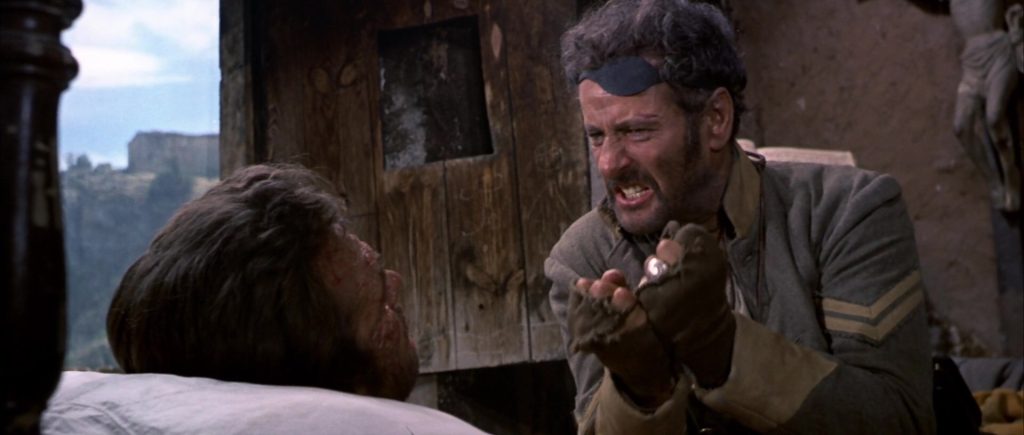
Reaching Step 8 can feel like we’re riding through a perilous and forbidding Spaghetti Western landscape.

We’ve undoubtedly come a long way, but during our addictions, we were like tornadoes tearing through people’s lives. Friends, family, and associates were left worn out, suspicious, and even resentful. They may not be feeling very neighborly toward us right now.

If our recovery means anything, we have to grow up and take responsibility for our past conduct. Repairing the wreckage of our lives includes making right our wrongs, and Step 8 prepares us to do this. It reads:

Made a list of all persons we had harmed, and became willing to make amends to them all.”

The Big Book is straightforward on this, stating: “We have a list of all persons we have harmed and to whom we are willing to make amends. We made it when we took inventory,” and adds, “If we haven’t the will to do this, we ask until it comes.”

Many commentators have elaborated on Step 8, turning it into a grand endeavor with recommendations for inventories, worksheets, guided imagery, affirmations, meditations, and more. However, we may fairly question the necessity of these elaborate tools if we have the right motivations when undertaking this step. Approaching our amends with the appropriate state of mind renders these additional suggestions superfluous.

When we have made the list of people we have harmed and are reflecting carefully upon each instance, we check our motive. Unless we want an amends turning into an Old West showdown, we must proceed with the right attitude. Is our motive good, bad, or ugly?

The Good

When our motive is good, we go beyond expressing regret; we want to take active steps to repair the harm and demonstrate our genuine commitment to change. We act according to God’s will and timing, for the sake of others and not for ourselves.

Our willingness flows from a commitment to doing what is right and taking responsibility for our conduct. We see this as a moral, ethical duty that aligns with our understanding of God’s will. Therefore, no personal weakness – whether fear, pride, or other obstacle – will stand in our way. We’re dedicated to seeing it through even though we’ve resolved never to repeat the mistake.

We also genuinely care about the well-being of others. We’re empathetic, sensitive to their experiences, and believe their feelings should be validated. Providing a sense of closure is important, too – making the amends will aid a healing process that lets them move forward without lingering resentments or unresolved emotions.

Another goal for us is to restore trust and build, rebuild, or prevent the deterioration of the relationship. We want to address the matter personally and directly, if possible, to mitigate misunderstandings and prevent conflicts from escalating.

Finally, we aspire to be a positive role model and set an example of honesty, accountability, and humility.

In sum, when our readiness to correct the wrong is sincere, we’re in the right place to work Step 9, making our amends.

The Bad

In contrast to the good, there may be an instance when our willingness to heal an old hurt is less than genuine, or downright bad. Neither personal integrity nor doing God’s will rank highly on our list of priorities.

Maybe we’re seeking emotional relief or trying to get something we want. Even when making the amends is a priority—i.e., we’re willing—it may not be due to good motives.

Apologies can manipulate another’s emotions or actions. They can generate sympathy or pity or be used to divert attention from our misconduct. They may be crafted in a way that subtly blames the victim, imbuing them with an emotional burden or guilt and making them wonder if they are responsible for the situation.

An amends may also be fueled by our own ego, or to earn respect, or to appear as the most humble person in the room.

There is also the attitude that we never know when we’ll need a favor, or that a strategic retreat in the form of an apology makes the other think we respect their feelings and somehow helps us stay in the game.

When our motives are bad, we use amends to purposefully manipulate our social interactions and resolve conflicts in our favor.  In such instances, we appear to be incapable of grasping and developing a manner of living which demands rigorous honesty.  Sooner or later, these pretenses probably will blow up in our faces.  

The Ugly

Ugly motives are conflicting, messy, and impair our willingness to make a needed amends. They usually are a sign that we haven’t fully worked our Steps in the first place.

Perhaps we feel some compulsion to do the right thing, but we’re paralyzed by fear – fear of rejection, retaliation, or some other negative consequence. Or, lack of confidence in ourselves makes one or more amends seem too daunting to pursue.

Shame or guilt may cloud our ability to think and move forward.

Pride and stubbornness keep us at a standstill. We worry that admitting a wrong and apologizing will belittle our self-image and make us look weak.

Rationalizing or justifying our behavior is a path to denial and resentments.

If we lack faith that anything good will come from doing God’s will and making the amends, we’ll invariably sit on our hands.

Our ugly motives are relatively easy to spot. They are among the most obvious “character defects” identified in the preceding Steps, which we very much need to go back and address.

Conclusion

Our motives matter. If they are bad or ugly, we’ll remain stuck in the same isolated relationship landscape that characterized our life in addiction.

When our intentions are pure, we can move forward to making amends with the genuine aim of healing relationships and restoring trust, motivated by compassion and a commitment to doing what’s right. Selflessness not only benefits those we’ve harmed but also aids in our own spiritual growth and recovery.  We’ll address the benefits more fully next month, in the context of Step 9.

Katie Rhodes: Rising Dawn in Recovery

Katie Rhodes: Rising Dawn in Recovery

A Journey from Darkness to Light

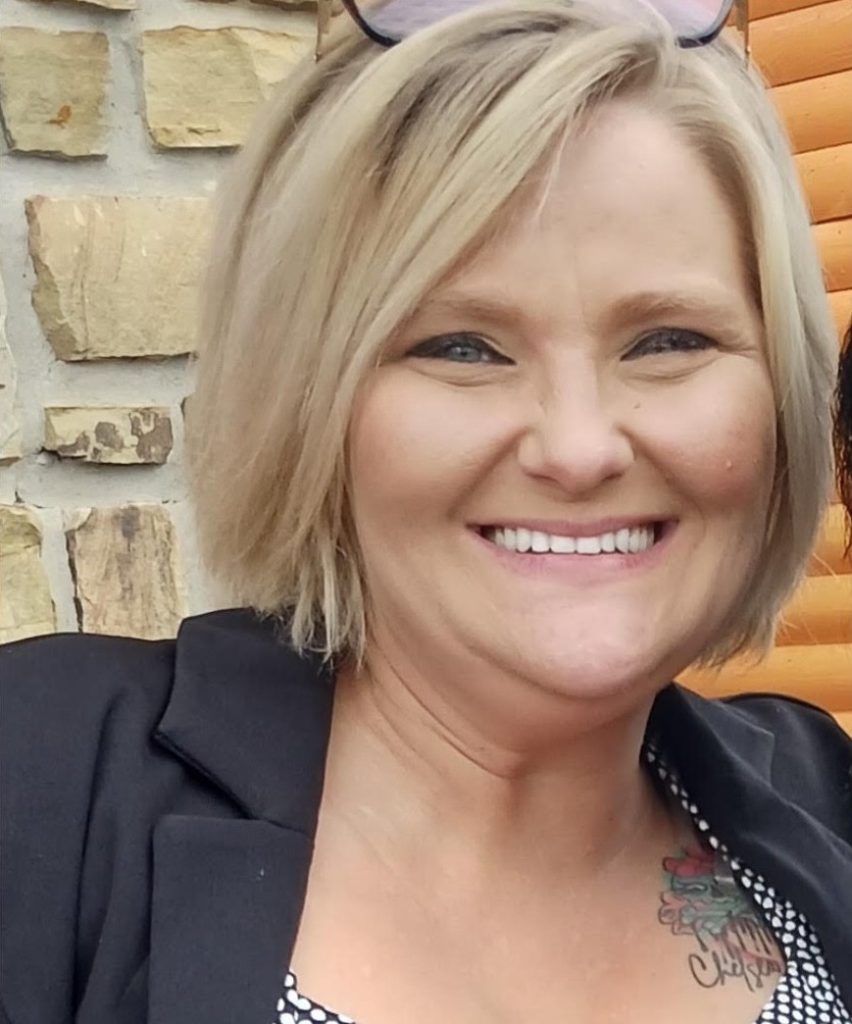
Meet Katie Rhodes! Recently, we had the pleasure of chatting with Katie, who generously shared her journey in recovery and the newfound clarity, understanding, and awareness that has come with it.

Her story is one of profound transformation. Having battled addiction and come out on the winning side, she now stands as a wonderful role model for clients in our recovery program.

Today, Katie enjoys many roles with CORE. She is the house manager of our women’s intake house and our facilities manager in Branson. She also teaches 4D Recovery classes and leads our weekly orientation for new clients. Her busy days are filled with purpose and service, which she embraces with dedication and enthusiasm.

Katie came from a broken home where substance abuse loomed large. As a child, she was a straight-A student and a self-described “classic overachiever” who won spelling bees and writing contests. However, during her junior year of high school, her town was hit by a storm and tornado, leaving her house without power for several months. Katie began visiting friends on the side of town that still had power, where she was introduced to drinking and drugs.

Before long, Katie was using drugs regularly and dropped out of school to party. Being shuffled between parents didn’t help. She moved out on her own when she turned 18 years old. Katie quit using substances when she became pregnant with her partner, but after she gave birth, her life took a downturn when her partner brought heroin home. “That’s the moment I can go back to and say that my life changed,” she says.

The next decade of her life was pure chaos, characterized by drug use, an unstable home life, and tenuous connections with family. Katie recounted for us her life as “the dope man’s girlfriend.” She had another baby, and custody of both children was placed with grandparents.

Katie then made several unsuccessful trips to rehab. She says, “There are a lot of well-meaning people in that field. Unless they understand addiction, they can’t be any help at all. No matter how long you stay in rehab, you’ll go out and make the same mistakes because you’re powerless over your addiction.”

She came to CORE for the first time in 2018 but stayed only three months. Looking back, Katie laments, “I didn’t do anything toward my recovery. I thought I’d be solid with some time to get under my feet. I never worked the Steps. I went to Illinois to be with a guy, which was a terrible idea. I left here on a Wednesday and was drunk by Saturday.” Katie continued to flounder and finally landed in a sober living house on the outskirts of St. Louis. It was there that she had a life-changing epiphany:

It was just one house and only four people in the whole house. On my second day there, we went to an outside meeting where they talked about the 12 Steps. I remembered my time at CORE when I’d refused to do them. I suddenly thought, how can I sit here, asking why I can’t get sober, when I never even tried doing the Steps? I’d never even tried to get sober. And it occurred to me that I could. That was an eye-opening day, a good day.”

Thus, Katie returned to CORE in September 2022. She sees this as significant because it is the first time she ever began working the 12 Steps. She remembers, “I gave it my all. And it works. That’s all it took, just actually doing them. I drank the Kool-Aid and gave in to doing them. It tastes good (laughing).”

Katie describes her subsequent recovery as a time when the pieces of her life are falling together in new and unexpected ways, more wonderful than she could have ever imagined. A significant part of this transformation is her deepened relationship with God. Katie shared about her profound spiritual awakening as follows:

I always believed in God but was mad at Him. Now, God is my best friend. Legit. I say my prayers when I wake up in the morning and at nighttime. Even during the day, I talk to God as my best friend and stay in constant contact. How ungrateful would I be not to uphold a positive relationship with Him when He’s blessed me?”

Early in recovery, Katie explored various churches around Branson but feels a special connection with our own CORE Church. “I get my church here at CORE,” she matter-of-factly says. She’s open to the messages shared by our pastor Cary McKee because of his empathy and understanding. “He’s been where I’ve been,” Katie notes, highlighting the unique bond and sense of community she feels at CORE Church, which she describes as “a totally judgment-free zone.”

Katie has felt gratitude in her heart every day for her new life. When she graduated from our one-year program, she remembered the Lord’s words, “from everyone who has been given much, much will be demanded.” She not only joined our Second Mile group but also signed up to go through our presenter’s training so that she could teach recovery classes. Katie was nervous before the first class she taught but now feels comfortable in this new role. Significantly, she says, “It means little to know everything in the Big Book if you don’t apply it in your own life. You have to show everybody that you’re living it, too. Every day of your life.”

She also became house manager for our women’s intake house in Branson. Katie admits to becoming attached to the women in her house, as well as becoming emotional when they move up to a CORE peer house. She shrugs, “But that’s the process. I only get them for a short time.  We try to accomplish as much as possible. The fact that they move to a peer house means they’re growing.” She identifies the house’s morning devotionals as important time for her house. Every day, at 7:15 a.m., the entire house gathers in the living room to read from the Bible or other devotional materials. Katie observes with satisfaction when participants say, “it’s talking to me,” during readings.

For the newcomer to CORE, Katie has valuable advice: “Open your Big Book. Read it. Do what it tells you to do. Also, especially on intake where you come to the Center every day, look around and listen. Find someone that you want what they have in recovery and gravitate toward them. Stick with the winners. Don’t spend your time gossiping or worrying about a relationship with a guy.”

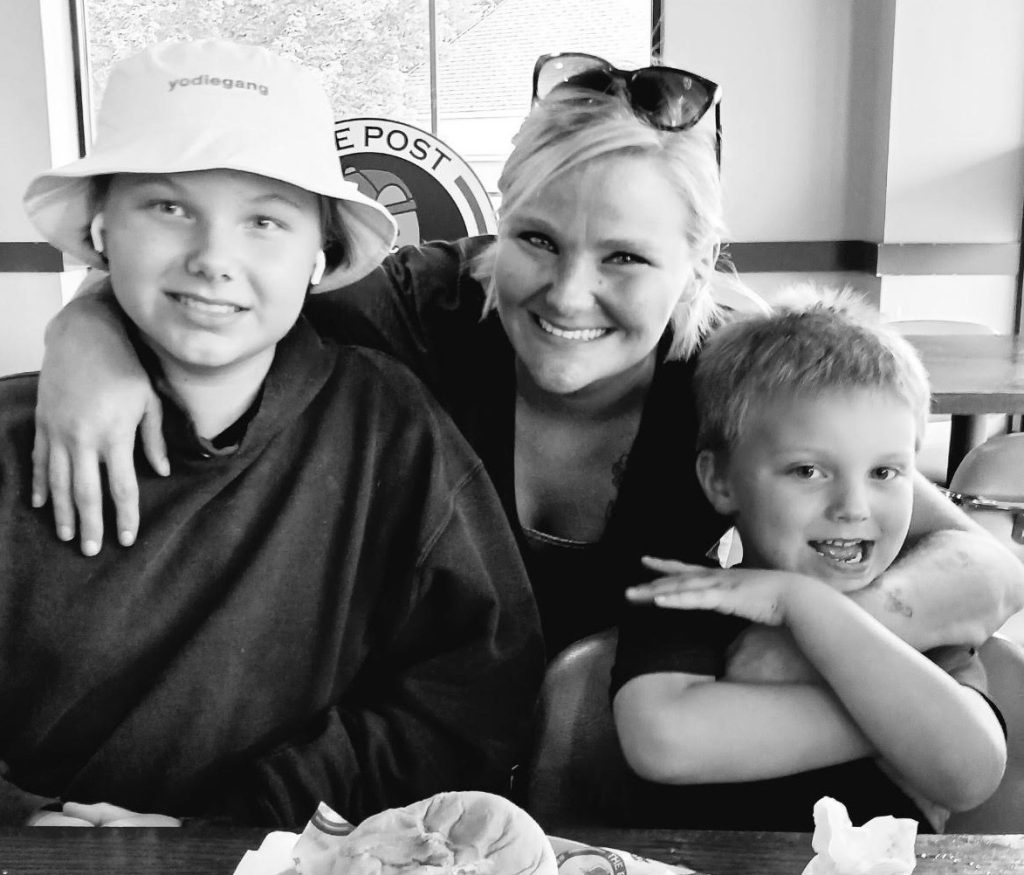
On the personal front, Katie has entered her sons’ lives again. She becomes emotional talking about them and expresses heartfelt thankfulness for having both with her this past Christmas. Her oldest son calls her every day now. In August, Katie will go on vacation with her youngest and his grandmother. She says having her children back in her life is beyond wonderful, “something I thought would never happen, you know?”

Looking to the future, Katie’s dedication to her role within CORE appears unwavering. “I need to be here unless I have a really good reason to leave,” she says, “everything’s here, in terms of being able to help people and do something good with my life.” When asked where she sees herself in three years, Katie said, “Honestly, I see myself here,” she says, “I feel called to do this!”

We at CORE appreciate Katie’s commitment to her own recovery and her dedication to guiding newcomers. She exemplifies the strength and hope that comes from turning our will and life over to the care of God. We expect her recovery journey to continue to shine as a beacon of new beginnings and endless possibilities for everyone she meets!