
From Chaos to Craft: Brandon Pitman’s Road to Recovery
When we sat down with Brandon Pitman last month to hear his personal story, there was a particular moment that put his remarkable recovery transformation into perspective.
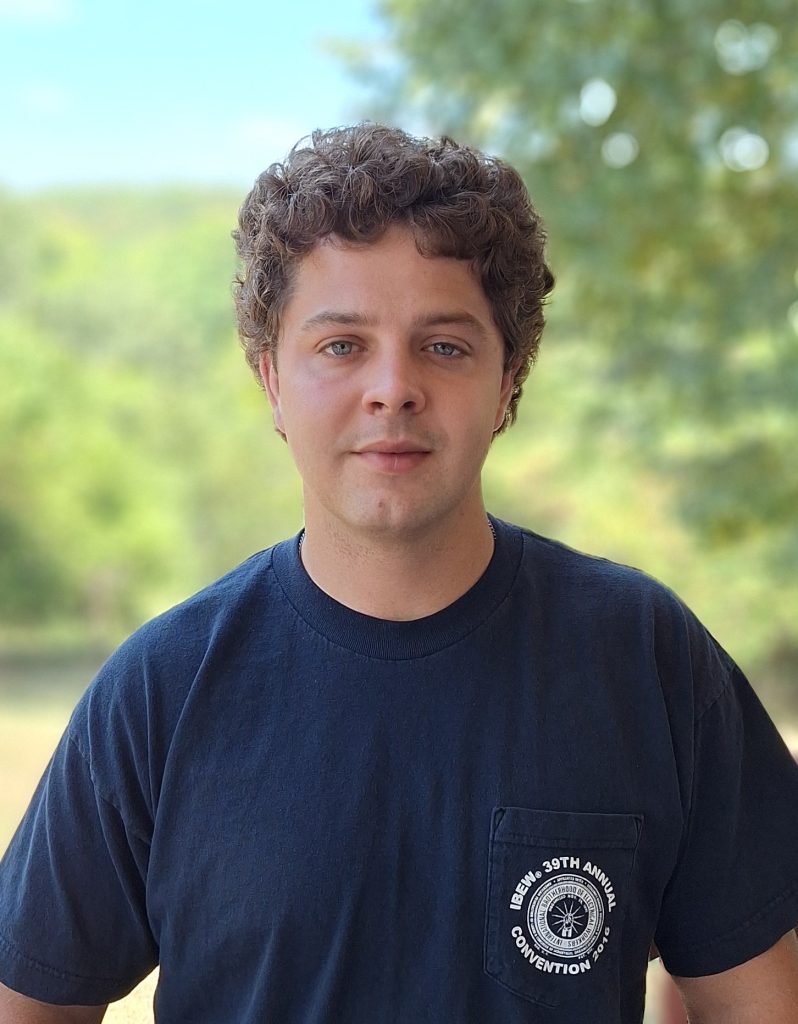
Brandon was reflecting on how much he’s changed for the better in recovery, and in the same breath he mentioned his girlfriend Regina, whom he openly admires and respects. He said:
“I’m a different person today. My girlfriend would never tolerate the person I was five years ago. A completely different person. I’m glad – I really am.”
For context, Regina isn’t part of the recovery world. She’s a “normie” from a strong family with a solid career at a local hospital. Brandon knows the man he used to be would have driven her away immediately. In that unguarded moment, he expressed a special kind of gratitude for his spiritual experience working the 12 Steps, because today he is capable of building and keeping a healthy, loving relationship with someone he truly admires.
Recovery has brought Brandon many blessings. He’s free from the obsession to drink or use. He teaches 12 Step recovery classes locally and sponsors others to help them find what he’s found. He has also built a solid career as an HVAC technician, earning multiple EPA and industry certifications. At 25, he is living as a resident member of CORE’s recovery community, building the kind of life he always dreamed about but never had in his youth.
Brandon grew up in Sullivan, Missouri, a small town where everyone knew your name and Friday nights were for football. Money wasn’t scarce, but stability was. Substance use ran on both sides of his family, and home life could turn violent. He tried marijuana at 13, but after an abusive incident with his father, “the rebellion started,” he recalls. Sneaking out, smoking, raiding the medicine cabinet, and experimenting with drugs became his escape from home.
School and sports quickly fell by the wayside. As his parents’ marriage dissolved, truancy letters piled up until they had him emancipated. By 17, he was couch-surfing, living in his car, and selling marijuana and pain pills to fund his habit. Hoping for a fresh start, he moved to Florida to live with his grandfather, an AA old-timer with decades of sobriety. Brandon attended meetings and found work in landscaping, but soon relapsed into IV opiate use with the help of an addicted relative and learned firsthand the misery of withdrawal.
For the next few years, he bounced between Florida and Missouri, working construction and factory jobs while drinking and using. “I tried the geographical cure three or four times,” he says. “It never worked, because wherever I went, I’d run into myself.” He survived two serious car crashes, one leaving him with a traumatic brain injury, yet he continued chasing the next high. By early 2019, he was living in the woods or in cars, awake for days on meth and hallucinating.
Eventually, he went to his family for help. They brought him to Valley Hope in Boonville for a 28-day stay, which he initially intended as just a “tolerance break.” But a presentation from a CORE graduate on the cycle of addiction changed his thinking. For the first time, he saw a path forward and agreed to enter CORE in May 2019.
Brandon’s first stay at CORE gave him structure and an introduction to the 12 Steps, but he admits he still wasn’t fully committed. A week before graduation, he left and quickly spiraled. In early 2021, at his lowest point, he found himself in his mother’s garage, hallucinating, and shouting at God to either help him or take his life. Just hours later, a recovery friend called and encouraged him to get back into a program.
This time, he entered another sober living program and, guided by a strong sponsor, began working the Steps. He completed a searching Fourth Step, made amends, and found purpose in helping others. Believing he had experienced a spiritual awakening and was ready to move on, he rented a studio apartment. Unfortunately, he promptly lost touch with his recovery community, stopped going to meetings, and became isolated. “I got unplugged,” he says. A joint with a family member led to another spree. After legal trouble and a 60-day treatment in Florida, his probation officer gave him a choice: prison or CORE.
Brandon chose CORE, returning on November 7, 2023. This time he reworked the Twelve Steps from the beginning. “Being older and more mature through the experiences I’ve had, I know I can’t be the guy who smokes one joint and still be fine,” he says. “My experience, confirmed by the truth in the Big Book, leaves me absolutely certain that I need to be here.” In time, he was helping others again, staying connected through Big Book study, CORE’s 4D recovery classes, and daily structure. He credits CORE’s staff and community for keeping him grounded and moving forward.
Ultimately, Brandon credits God for his recovery. “On the basis of self-knowledge, it’s not enough to stay sober,” he says. “I had to believe that a Power greater than myself would restore me to sanity in the area of the first drink.” When he first came to CORE, he was agnostic and wanted nothing to do with God. Now, he is a Christian. “I believe Jesus died on the cross for my sins. I know I’m a sinner in need of a savior.” Brandon also observed, “Cultivating my relationship with God saved me from being the angry young man I used to be. It saved me from myself.”
An important breakthrough came when an old friend and CORE graduate invited him to try HVAC work. He started while still waiting tables, but soon committed full-time. Under a veteran foreman, he learned wiring diagrams, brazing, installations, and maintenance. He studied his craft diligently, passed the demanding six-hour EPA Universal exam, and earned multiple certifications, including a gas certificate and A2L refrigerant training.
Today, Brandon is a full-time HVAC technician, a recovery class instructor, and a steady member of CORE’s Falcon House. For those serious about working the 12 Steps, he says it is an ideal place to grow, and he is always willing to sponsor anyone ready for real change. His advice is simple and direct: “Reach out and ask for help. When enough is finally enough, if you’re not dead and you don’t end up in prison, there are tons of people out here who will help.”
Brandon is also repairing relationships with family, several of whom are now pursuing sobriety themselves. And then there’s Regina, the relationship he clearly treasures but keeps private. “We’ve talked about the future,” he admits, but he’s not giving away any details. It’s a bit like when the whole world speculated about Travis and Tay Tay’s engagement. When the time came, they told us in their own way.
At just 25, Brandon is no longer surviving. He is living a life of purpose, building a career, nurturing a loving relationship, and helping others find freedom. He didn’t get here by luck. CORE provided the structure and community, God provided the power, and Brandon brought the willingness and effort. The result is the “normal” he has wanted all his life: a steady home, a career, a woman he loves, a mending family, and a life that is not just surviving, but quietly, solidly good.
We at CORE are so very proud of Brandon and the life he’s building. We wish him all the best in the future!