
Hitting Rock Bottom
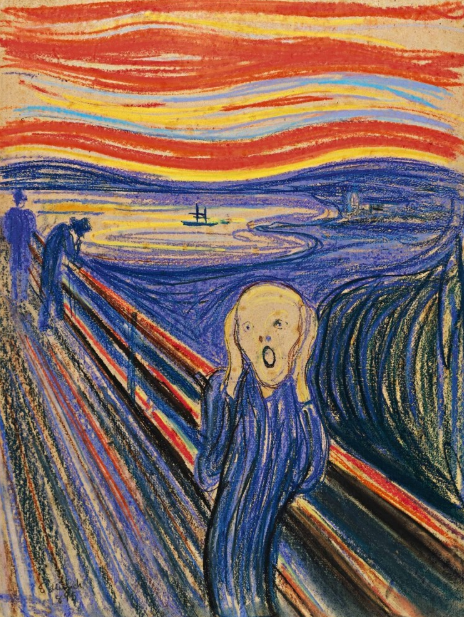
One of the more surprising things about hitting rock bottom is how often it’s romanticized on social media. People spout platitudes like, “When the sky is blackest, you can see the stars,” or refer to it as a “dark night of the soul” – as if enduring it were some kind of noble journey.
But hitting rock bottom is nothing like Scarlett O’Hara shaking her fist at the heavens and vowing never to be hungry again. It’s far more hollow. It happens when the addict becomes emotionally severed from everyone, everything, and all sense of purpose. There’s an existential crisis in which life itself feels meaningless. It’s not heroic at all – it’s despair. It’s truly the “jumping-off place,” as Bill Wilson called it.
Anyone who has recovered can vividly recall what it felt like to hit rock bottom – the crushing realization that nothing in life was working anymore, and the overwhelming sense of hopelessness. At CORE, we don’t romanticize this dilemma. In fact, we wouldn’t wish it on anyone. It’s a place of profound suffering and emotional isolation. And yet, for those of us who have recovered, we gratefully mark it as the end of our suffering. What looked like the end of the road turned out to be the final chapter of an old life – before the first page of a new one.
To better understand what it means to hit rock bottom, it helps to broadly view our lives in terms of connections, i.e., the attachments to people, places, and things that give existence depth and meaning. Even just considering our relationships with people, we know that such bonds form through shared experiences, mutual trust, and emotional support. They tether us to the world and provide a sense of belonging and purpose. The strength of our people connections is shaped by how we invest our attention and care. When we show up for others and maintain commitments, these relationships deepen. But when addiction takes hold, it begins unraveling the fabric of these relationships thread by thread.
It’s easy to see how addiction erodes these vital connections. Addictions nearly always arise from the mismanagement of pain – physical, emotional, or spiritual – that is overtreated with substances. Once the obsession with drugs or alcohol takes root, it demands total allegiance. The addicted person becomes powerless to prioritize anything else. They begin choosing the substance over everything else, whether family milestones, work responsibilities, or intimate relationships. Even the most important events and people cannot compete with the cravings. A child’s birthday party is skipped. A crucial business meeting is missed. Time with a spouse is pushed aside. The addict chooses wrongly with increasing frequency until a new pattern emerges. And each time the substance wins, another connection breaks. Eventually, the addict’s estrangement becomes complete.
Addiction is not a passive condition. It’s active, cunning, and adaptive. The attack is subtle and creeps in quietly, persuading the addict to make just one more exception, one more compromise. A responsibility is skipped here, a promise broken there. Each of these decisions is thoroughly self-centered, and over time, they accumulate into a devastating pattern. The addict wakes up one day to find that their relationships, dreams, and even their sense of self have been hollowed out. What remains is isolation and wreckage: a broken marriage, estranged children, lost jobs, foreclosed homes, abandoned hopes, etc. Every meaningful connection has been sacrificed at the altar of addiction.
The toll is immense, with each broken connection giving rise to a separate grief event. And the addict grieves without resolution, cycling through denial, anger, bargaining, and depression. Unlike the loss of a loved one due to fate, these losses carry the added weight of personal responsibility. Deep down, the addict knows their own actions or inaction caused it all. Guilt and shame take over, filling the emotional space once held by love, joy, and hope. And it’s not just emotional. Addiction changes the body too. So when the addict finally sees themselves – whether in the mirror or in a rare moment of clarity – they often barely recognize the person staring back. Their mounting pain drives them further into the very behavior that is destroying them.
The Big Book refers to addiction as “insanity” because the addict tries to solve the problem with the problem itself. It’s a senseless, destructive cycle, but even that isn’t the full picture. Beneath the emotional and physical wreckage lies a deeper layer: the spiritual. This doesn’t necessarily mean religion, but it certainly can. It also includes meaning and our sense of place in the world. As the addict sinks further, their inner questions grow darker, more desperate, and more existential.
No one sets out intending to ruin their life. But once the damage is done, addiction reveals itself as a cruel and relentless master. The addict feels stripped of connection and purpose. They may feel betrayed by the world, abandoned by loved ones, and even forsaken by God. This is the final and most dangerous stage: the existential crisis. The addict no longer believes things can get better. They feel spent, consumed by suffering, and begin asking terrifying questions: Why am I still here? What’s the point of this? At this point, rock bottom isn’t just a metaphor. It’s a real and perilous place, where the ledge of the abyss somehow starts to look inviting.
One aspect of rock bottom that deserves special attention is the individual’s relationship – or lack thereof – with God. This spiritual rupture often goes unspoken in recovery circles today, but it’s one of the most profound elements of the experience. Whether acknowledged or not, a spiritual void is felt acutely at rock bottom. It’s not merely the loss of religion but a deeper feeling of being cut off from any source of meaning, direction, or transcendent hope.
The Swiss psychiatrist Carl Jung, whose insights helped shape the foundations of Alcoholics Anonymous, described this crisis in deeply spiritual terms. In a 1961 letter to Bill Wilson, Jung reflected on a former patient, an alcoholic he had treated decades earlier. He said he could do nothing for the man. The reason? Jung believed the alcoholic’s craving was, at its core, a spiritual thirst – a longing for wholeness, for what he called union with God.
Jung’s insight strikes at the heart of rock bottom. The addict isn’t just suffering the consequences of poor choices. He is confronting the terrifying realization that his life has no center. All meaning has collapsed, and he has no resources left to turn to. At rock bottom, the need for God isn’t just philosophical – it’s visceral.
We hope this gives the reader a clearer picture of what hitting rock bottom really is. The Big Book observes that “an alcoholic in his cups is an unlovely creature”, which, to those of us who are recovered, may be the understatement of a lifetime. Rock bottom is not poetic. It is hollow, purposeless, and unbearable. And unless help comes soon, the person trapped there may become just another name in the coroner’s ledger.
But there is a solution. Recovery from this seemingly hopeless condition of mind and body is entirely possible. Through the 12 Steps of Alcoholics Anonymous, countless men and women have emerged from the wreckage of their lives into an extraordinary, new way of living. At CORE, that’s our mission. Our staff shares over 200 years of recovery experience, and we’re committed to showing others how it works. We know what it’s like to reach the end, and we know what it takes to begin again and walk in newness of life.